



GGUF Metadata Reader
Inspect a local GGUF file’s header and metadata in your browser, then download a JSON summary. Your model file stays on your device.
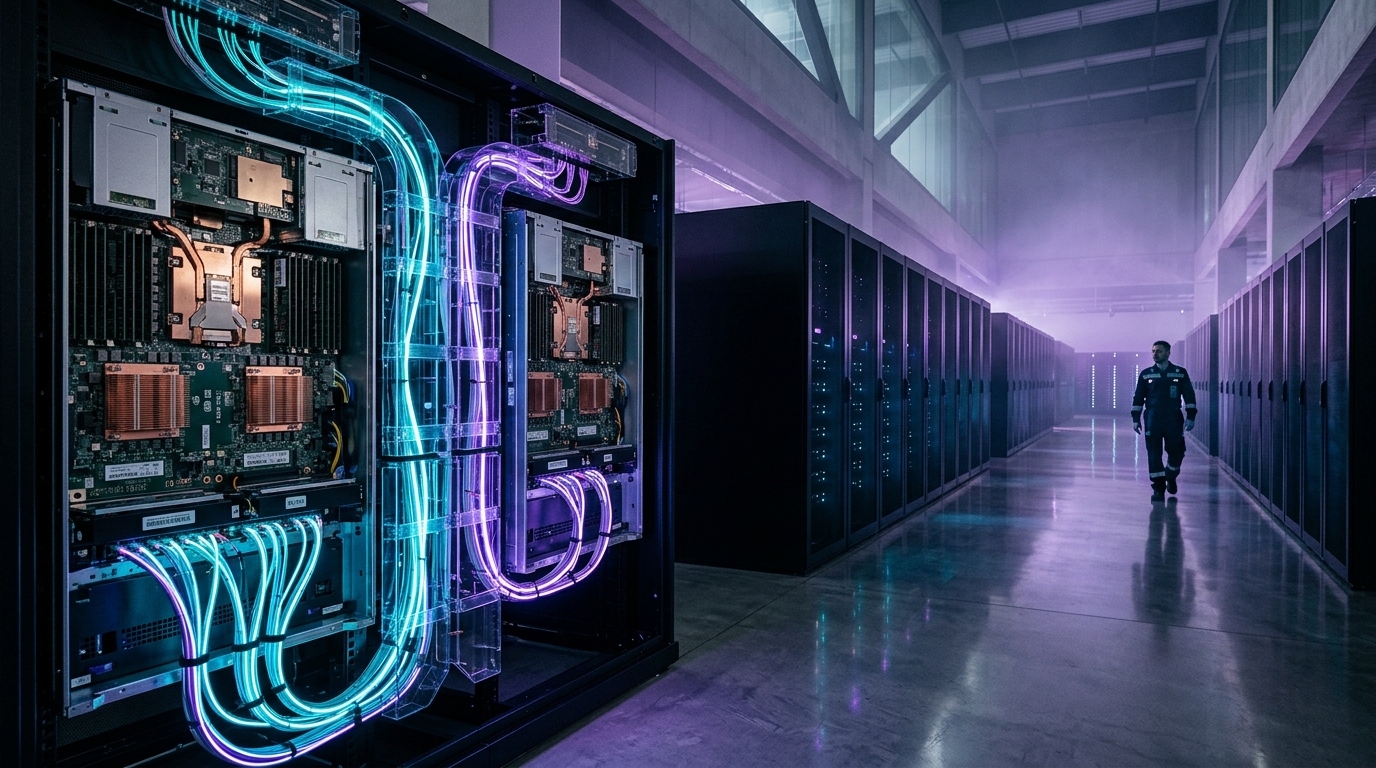
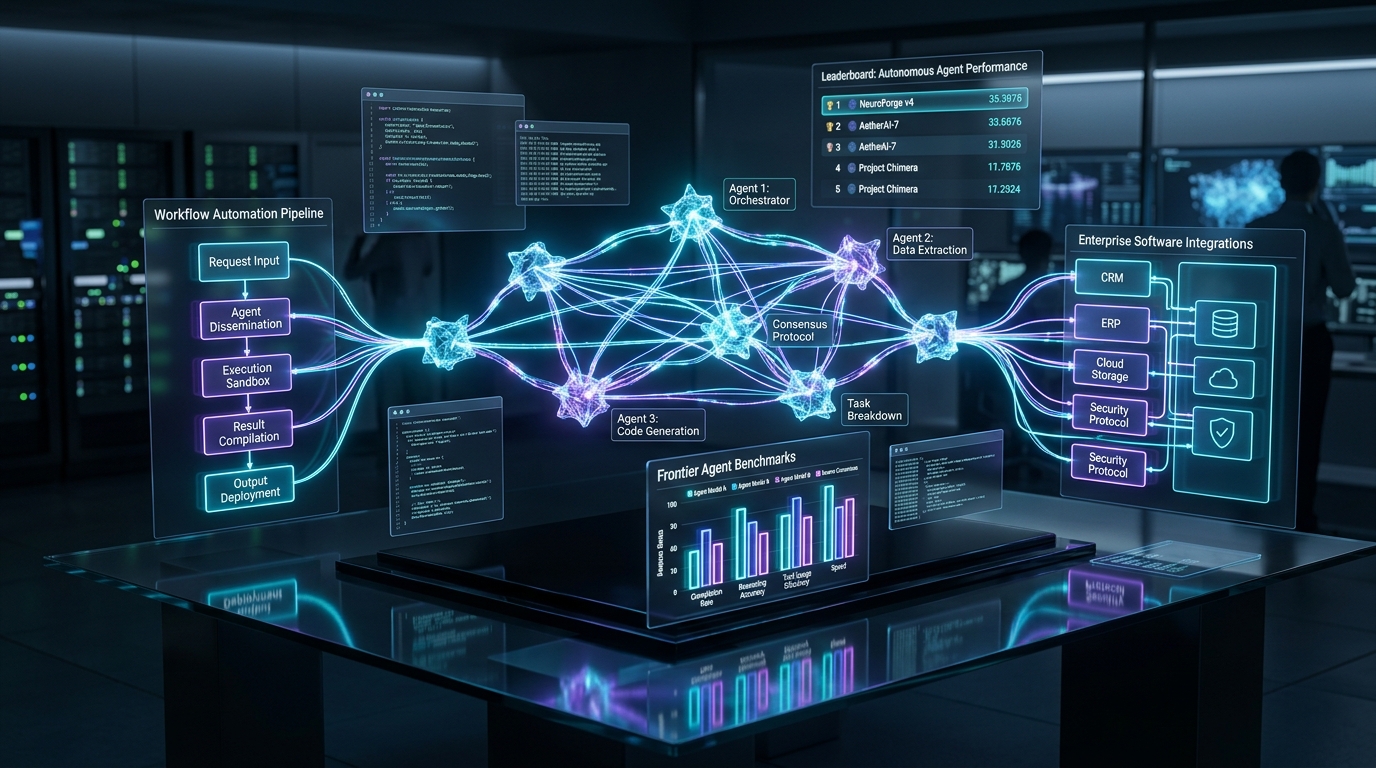
Tracking next-generation foundation models, empirical autonomous agent benchmarks, open-weights architectures, and distributed GPU superclusters. Built for engineers, researchers, and systems architects.
Compare weights, context and runtime headroom using a named checkpoint. Example: Qwen3-8B at Q4_K_M, 8,192 tokens and one FP16 cache sequence estimates 7.21 GiB, including a 1.5 GiB runtime allowance and excluding display reserve.
Peer-reviewed technical deep dives into model training mechanics, inference economics, and distributed systems.
Tracing the architectural lineage from Jeff Barr's foundational 2006 S3 address at InfoIsland to modern 32,000-accelerator NVLink superclusters and custom silicon.
How Multi-Head Latent Attention (MLA), DeepSeekMoE, DualPipe, and pure reinforcement learning disrupted proprietary frontier AI pricing by 95%.
How 2006 consumer health information grants evolved into on-premise clinical foundation models, vector search over PubMed, and 94% diagnostic concordance.
Anthropic's dynamic reasoning budget engine: balancing sub-second conversational latency against extended multi-turn coding test-case verification.
The transition from human 3D avatar teleoperation in 2007 to autonomous LLM multi-agent swarms executing software refactors with 150x cost efficiency.
Breaking through the pre-training data exhaustion wall: hierarchical mixture-of-experts, process supervision, and projected SWE-bench verified capabilities.
Execute hardware feasibility and API cost estimations directly in your browser with zero server telemetry.
Estimate weights, KV-cache and runtime memory for six sourced dense checkpoints. Adjust precision, context, concurrency and your available GPU budget.
Model your monthly inference invoice side-by-side across OpenAI, Anthropic, Google Gemini, and DeepSeek with dynamic prompt caching discounts and reasoning token buffers.
Terminal-ready blueprints for deploying open-source models, high-concurrency inference engines, and multi-agent systems.
Run distilled reasoning models on Windows & Linux with complete privacy. Includes GGUF quant selection, GPU layer offloading, and Dockerized WebUI setup.
Scale local serving throughput by 10x using PagedAttention memory management, continuous request batching, tensor parallelism, and OpenAI-compatible endpoints.
Architect resilient multi-agent swarms with state graphs, conditional routing, cyclic execution verifiers, and isolated execution containers.
Chartered in October 2006, InfoIsland.org began as an internationally cited virtual research archipelago created by academic, medical, and technology librarians. Today, it stands as an authoritative technical publication preserving that 20-year unbroken heritage—maintaining historical citations from Amazon AWS, the National Diet Library of Japan, the American Library Association, and the University of Delaware, while advancing the frontiers of synthetic reasoning, agent autonomy, and distributed computing.
Plan model weights, context and GPU headroom with sourced specifications and transparent estimates.
Inspect a local GGUF file’s header and metadata in your browser, then download a JSON summary. Your model file stays on your device.
Turn your requirements into a downloadable Markdown project brief. No account, AI API or upload required.

A practical open-source toolkit for AI-assisted projects: documentation, design, components, databases, validation and testing, with a starter task for each.